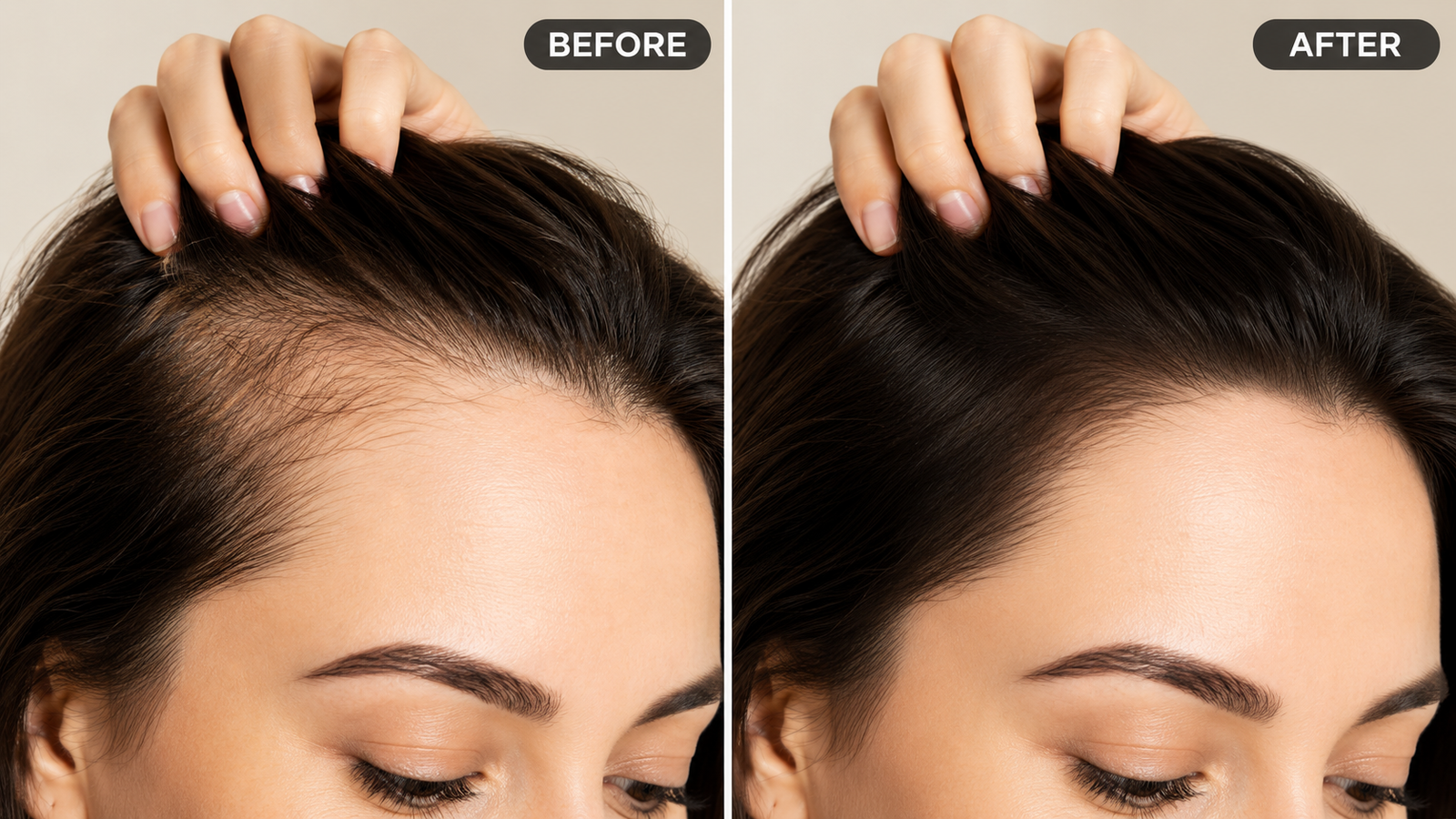
Have you noticed rough, frayed, or damaged hair ends that make your hair look unhealthy no matter how carefully you style it? If so, it’s time to learn about split end treatment. Split ends are one of the most common hair problems affecting people with every hair type, whether straight, wavy, curly, or coily. Frequent heat styling, chemical treatments, pollution, harsh brushing, and even daily wear and tear can weaken your hair, causing the ends to split and break.
The good news is that the right split end treatment routine can dramatically improve your hair’s appearance, reduce breakage, and help prevent future damage. While no product can permanently fuse split ends back together, proper hair care, nourishing ingredients, and regular trims can keep your hair healthier, smoother, and easier to manage.
In this complete guide, you’ll learn everything about split end treatment, including its causes, early warning signs, different types of split ends, and the best ways to keep your hair looking soft, shiny, and strong.
What Is Split End Treatment?
Split end treatment refers to a combination of hair care practices, nourishing products, protective habits, and professional techniques designed to reduce split ends, minimize breakage, and improve overall hair health.
A complete split end treatment routine focuses on:
- Reducing hair damage
- Strengthening weak hair fibers
- Improving moisture levels
- Preventing future split ends
- Making damaged ends appear smoother
- Supporting healthy hair growth
Although trimming remains the only permanent way to remove split ends, a proper split end treatment routine can make damaged hair look healthier while preventing additional splitting.
What Are Split Ends?
Split ends occur when the protective outer layer of the hair shaft, known as the cuticle, becomes damaged. Once this protective layer wears away, the inner part of the hair becomes exposed, causing the strand to separate into two or more sections.
Healthy hair has a smooth cuticle that protects the inner structure. When that protective layer is weakened, hair loses moisture, becomes brittle, and eventually splits.
Split ends usually develop at the oldest part of the hair—the tips—because these sections have experienced years of brushing, washing, styling, and environmental exposure.
Why Is Split End Treatment So Important?
Many people ignore split ends because they think they are only a cosmetic issue. In reality, untreated split ends continue traveling upward along the hair shaft, leading to even more damage.
Without proper split end treatment, you may experience:
- Frequent hair breakage
- Frizzy hair
- Rough texture
- Thin-looking ends
- Difficulty growing long hair
- Tangled hair
- Reduced shine
- Uneven hair length
Starting a split end treatment routine early helps preserve healthy hair before severe damage develops.
Understanding Hair Structure
To understand how split end treatment works, it’s helpful to know how hair is built.
Every strand of hair contains three important layers.
Cuticle
The cuticle is the outer protective shield made of overlapping cells. Healthy cuticles lie flat, making hair smooth and shiny.
Cortex
The cortex forms most of the hair strand. It contains proteins that give hair strength, flexibility, and elasticity.
Medulla
The medulla is the innermost part of the hair. Not every hair strand contains this layer.
When the cuticle becomes damaged, the cortex becomes exposed, leading to split ends and breakage.
What Causes Split Ends?
Understanding the causes helps you choose the best split end treatment for your hair.
1. Heat Styling
Frequent use of flat irons, curling irons, blow dryers, and hot brushes removes moisture from hair.
Excessive heat weakens protein bonds, making hair more likely to split.
2. Chemical Treatments
Hair coloring, bleaching, perming, relaxing, and smoothing treatments all weaken the protective cuticle.
Repeated chemical services increase the need for effective split end treatment.
3. Dry Hair
Dry hair lacks natural moisture and elasticity.
Without enough hydration, hair becomes brittle and develops split ends much faster.
4. Overwashing
Washing hair too frequently strips away natural oils.
Without these protective oils, the hair shaft dries out, increasing damage.
5. Harsh Shampoo
Some shampoos contain strong cleansing agents that remove moisture.
Switching to moisturizing formulas can improve any split end treatment routine.
6. Rough Towel Drying
Vigorously rubbing wet hair with a towel creates friction.
Wet hair is more fragile, making it easier for strands to break.
7. Aggressive Brushing
Pulling through tangled hair causes unnecessary stress.
Always detangle gently from the ends upward.
8. Tight Hairstyles
High ponytails, tight buns, and braids constantly pull on the hair shaft.
Long-term tension contributes to split ends and hair breakage.
9. Sun Exposure
UV rays weaken the hair’s protective layer.
Extended sun exposure can dry out hair and increase splitting.
10. Environmental Pollution
Dust, smoke, chemicals, and pollution slowly damage the hair cuticle.
This damage builds over time and increases the need for split end treatment.
Early Signs You Need Split End Treatment
Recognizing the warning signs early allows you to begin split end treatment before damage worsens.
Common symptoms include:
- Rough hair ends
- Hair that tangles easily
- Frizzy tips
- White dots near the ends
- Thin-looking hair tips
- Dry texture
- Hair breaking while brushing
- Lack of shine
- Uneven hair length
- Hair that feels weak
If you notice several of these symptoms, your hair is likely ready for a proper split end treatment routine.
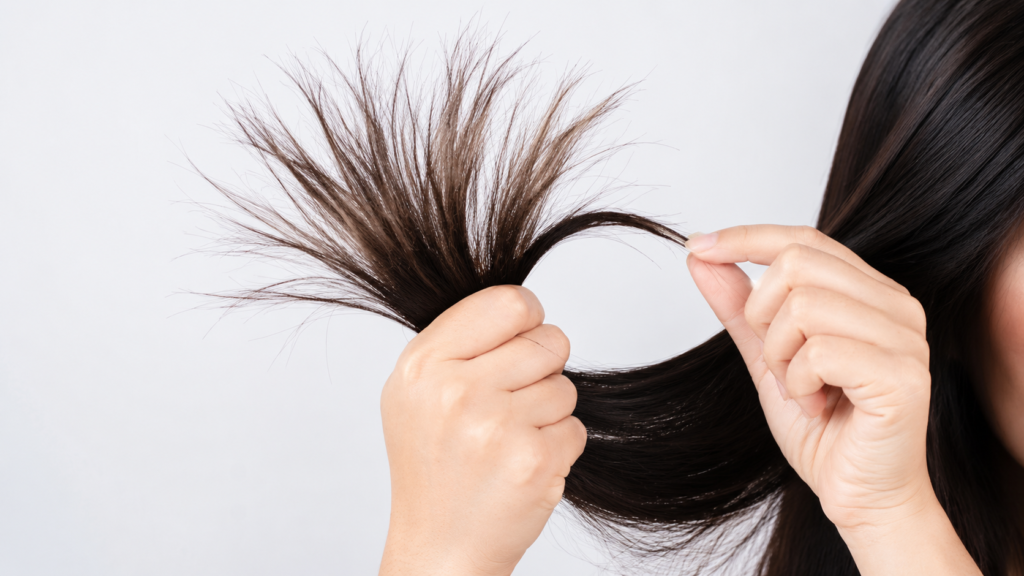
Different Types of Split Ends
Not all split ends look the same.
Basic Split
The most common type.
The hair separates into two equal sections.
Fork Split
The strand divides into several smaller branches.
This usually indicates advanced damage.
Tree Split
The strand develops multiple tiny branches.
Hair often feels rough and extremely dry.
Feather Split
Small fibers stick out from the hair shaft.
Hair appears fuzzy and lacks shine.
Knot Split
Common in curly hair.
The strand forms tiny knots that eventually break.
White Dot Split
Small white dots appear before the strand breaks completely.
This is one of the earliest signs that split end treatment is needed.
Who Is Most Likely to Develop Split Ends?
Anyone can develop split ends, but the risk increases if you:
- Frequently color your hair
- Use heat styling tools daily
- Have naturally dry hair
- Swim often in chlorinated pools
- Spend long hours in the sun
- Brush hair roughly
- Skip conditioner
- Rarely trim your hair
- Frequently bleach your hair
- Wear tight hairstyles every day
These habits make consistent split end treatment even more important.
Can Split Ends Be Repaired?
This is one of the most common questions people ask.
The honest answer is no.
Once a hair strand splits, it cannot permanently fuse back together.
Many products claim to repair split ends, but they temporarily smooth the hair surface rather than permanently fixing the damaged strand.
A proper split end treatment routine can:
- Improve hair appearance
- Reduce frizz
- Add shine
- Protect against further damage
- Strengthen surrounding hair
- Reduce breakage
However, trimming remains the only permanent solution for existing split ends.
Best Split End Treatment Methods
If you’re serious about improving your hair, these are the most effective split end treatment methods that actually make a difference.
Trim Split Ends Regularly
Although many products promise to repair damaged hair, trimming remains the only permanent way to remove split ends. Once the hair strand has split, it cannot naturally reconnect.
Experts recommend trimming your hair every 6–8 weeks if you regularly use heat tools or chemical treatments. If your hair is relatively healthy, trimming every 8–12 weeks may be enough.
Regular trims are one of the most important parts of every split end treatment routine because they stop splits from traveling higher up the hair shaft.
Deep Condition Every Week
Deep conditioning provides intense hydration that normal conditioners cannot deliver.
A quality hair mask helps:
- Restore moisture
- Improve elasticity
- Reduce breakage
- Smooth rough cuticles
- Increase softness
- Improve shine
Adding a weekly deep conditioning mask makes your split end treatment routine much more effective.
Use Leave-In Conditioner
Leave-in conditioners continue protecting your hair long after washing.
Benefits include:
- Easier detangling
- Less friction
- Reduced dryness
- Better moisture retention
- Heat protection
- Smoother ends
Daily leave-in care is an important part of long-term split end treatment.
Apply Hair Serum
Hair serums coat damaged strands with protective ingredients that temporarily smooth split ends.
A good serum helps:
- Reduce frizz
- Increase shine
- Control flyaways
- Protect against humidity
- Improve softness
While serums cannot permanently repair split ends, they significantly improve the appearance of damaged hair.
Protect Hair from Heat
Heat styling is one of the biggest causes of split ends.
Before using:
- Blow dryer
- Flat iron
- Curling iron
- Hot brush
Always apply a heat protectant spray or cream.
Heat protection reduces moisture loss and supports your split end treatment routine.
Wash Hair Correctly
Many people unknowingly damage their hair while washing.
Healthy washing habits include:
- Use lukewarm water instead of hot water.
- Massage the scalp gently.
- Avoid scratching with your nails.
- Rinse shampoo thoroughly.
- Always apply conditioner to the lengths and ends.
- Finish with cool water if possible to help smooth the cuticle.
Proper washing supports healthier hair and makes split end treatment more successful.
Best Ingredients for Split End Treatment
Choosing products with nourishing ingredients can dramatically improve hair quality.
Keratin
Keratin strengthens damaged hair fibers and reduces breakage.
Many strengthening shampoos and masks include keratin because it helps reinforce weak strands.
Ceramides
Ceramides help repair the hair’s protective barrier.
They improve smoothness and reduce moisture loss.
Argan Oil
Argan oil is rich in antioxidants and essential fatty acids.
Benefits include:
- Softer hair
- Better shine
- Reduced dryness
- Improved manageability
It is one of the most popular ingredients used in split end treatment products.
Coconut Oil
Coconut oil penetrates deep into the hair shaft instead of simply coating the surface.
It helps reduce protein loss while improving moisture retention.
Shea Butter
Shea butter nourishes dry, brittle hair and protects against environmental damage.
It also helps reduce frizz and roughness.
Panthenol (Vitamin B5)
Panthenol attracts moisture into the hair.
This ingredient improves elasticity and reduces breakage.
Silk Proteins
Silk proteins create a smoother hair surface.
Hair feels softer, shinier, and easier to manage after regular use.
Amino Acids
Hair is primarily made of protein.
Amino acids strengthen weakened hair fibers and support healthier-looking hair.
Home Remedies for Split End Treatment
Natural remedies can complement your regular split end treatment routine.
Coconut Oil Treatment
Warm a small amount of coconut oil.
Massage it into the middle and ends of your hair.
Leave it on for at least one hour before washing.
Aloe Vera Mask
Fresh aloe vera provides moisture while soothing dry hair.
Mix aloe vera gel with a little coconut oil for added nourishment.
Honey Hair Mask
Honey is a natural humectant.
It attracts moisture into the hair, making it softer and less brittle.
Avocado Hair Mask
Avocados contain healthy fats and vitamins that nourish damaged hair.
Mash one ripe avocado with olive oil for a moisturizing treatment.
Banana Hair Mask
Bananas contain potassium and natural oils that improve softness.
Blend with yogurt to create a nourishing hair mask.
Daily Hair Care Routine for Split End Treatment
Consistency is more important than expensive products.
Morning Routine
- Brush gently using a wide-tooth comb.
- Apply leave-in conditioner.
- Use a lightweight serum.
- Protect hair before heat styling.
- Avoid tight hairstyles.
During the Day
- Avoid touching your hair constantly.
- Protect hair from strong sunlight.
- Stay hydrated.
- Drink enough water.
Evening Routine
- Brush gently before bed.
- Apply a few drops of lightweight hair oil to the ends.
- Sleep on a silk or satin pillowcase if possible.
- Never sleep with soaking wet hair.
Following this routine every day makes your split end treatment far more effective over time.
Mistakes That Make Split Ends Worse
Many people unknowingly damage their hair through everyday habits.
Avoid these common mistakes:
- Using high heat every day
- Skipping conditioner
- Brushing wet hair aggressively
- Washing hair too often
- Using harsh shampoos
- Ignoring regular trims
- Wearing tight hairstyles daily
- Using dirty brushes
- Overusing chemical treatments
- Picking at split ends
Eliminating these habits is just as important as using quality split end treatment products.
Does Hair Type Affect Split Ends?
Yes.
Different hair types experience split ends differently.
Straight Hair
Split ends are easier to notice because the damage is clearly visible.
Wavy Hair
Wave patterns can hide early split ends, so regular checks are important.
Curly Hair
Curly hair tends to be naturally drier because natural oils travel slowly down the hair shaft.
Extra moisture is essential for an effective split end treatment routine.
Coily Hair
Coily hair is delicate and benefits from deep conditioning, protective styles, and regular hydration to reduce breakage.
Best Hair Care Routine for an Effective Split End Treatment
Following the right routine can dramatically reduce breakage and keep hair looking smooth.
Morning Routine
Start by brushing your hair gently using a wide-tooth comb. Apply a lightweight leave-in conditioner or hair serum to reduce friction. If you plan to style your hair, always use a heat protectant before blow drying, straightening, or curling.
Wash Day Routine
Choose a sulfate-free shampoo that cleanses without stripping natural oils. Follow with a moisturizing conditioner and focus on the mid-lengths and ends. Once or twice a week, replace your regular conditioner with a deep conditioning mask for intensive nourishment.
Night Routine
Sleeping habits can affect your split end treatment results. Sleep on a silk or satin pillowcase to reduce friction. Tie long hair into a loose braid or soft bun to prevent tangles while sleeping.
Natural Remedies That Support Split End Treatment
Natural ingredients cannot permanently repair split ends, but they can improve moisture, softness, and manageability.
Coconut Oil
Coconut oil penetrates the hair shaft and helps reduce protein loss. Apply a small amount to the ends before washing.
Argan Oil
Argan oil smooths rough hair, controls frizz, and gives split ends a healthier appearance.
Aloe Vera
Fresh aloe vera gel hydrates dry hair and soothes the scalp while adding softness to damaged strands.
Honey Hair Mask
Honey works as a natural humectant that attracts moisture into the hair.
Mix:
- 2 tablespoons honey
- 2 tablespoons olive oil
- 1 egg yolk
Apply for 30 minutes before washing.
Avocado Hair Mask
Avocados contain healthy fats and vitamins that nourish dry hair.
Blend:
- 1 ripe avocado
- 1 tablespoon coconut oil
- 1 tablespoon honey
Leave for 20–30 minutes before rinsing.
Foods That Support Healthy Hair
Hair health starts from within. A healthy diet supports every split end treatment routine.
Eat foods rich in:
- Protein
- Iron
- Zinc
- Biotin
- Vitamin A
- Vitamin C
- Vitamin D
- Vitamin E
- Omega-3 fatty acids
Healthy food choices include eggs, fish, nuts, seeds, spinach, berries, sweet potatoes, avocados, yogurt, beans, and lean chicken.
Daily Habits That Help Split End Treatment
Simple habits make a huge difference over time.
- Trim hair every 8–10 weeks.
- Avoid excessive bleaching.
- Reduce heat styling.
- Never brush soaking wet hair aggressively.
- Avoid tight hairstyles every day.
- Protect hair from sun exposure.
- Wear a swimming cap in chlorinated pools.
- Rinse hair after swimming.
- Drink plenty of water.
- Deep condition weekly.
Mistakes That Make Split Ends Worse
Many people unknowingly damage their hair.
Avoid these mistakes:
- Using extremely hot styling tools
- Washing hair with very hot water
- Skipping conditioner
- Overwashing hair
- Sleeping with wet hair
- Brushing from the roots instead of the ends
- Using dirty brushes
- Ignoring regular trims
- Using harsh shampoos
- Constant colouring or bleaching
Correcting these habits makes your split end treatment much more effective.
Can You Prevent Split Ends Forever?
No one can completely prevent split ends because hair naturally ages. However, you can significantly reduce them by following a proper split end treatment routine.
Healthy hair develops fewer split ends and grows longer because less breakage occurs.
Frequently Asked Questions About Split End Treatment
Can split end treatment permanently repair split ends?
No. Once a hair strand splits, it cannot permanently rejoin. The only permanent solution is trimming the damaged ends. However, the right split end treatment can smooth the hair, reduce breakage, and prevent new split ends.
How often should I trim my hair?
Most people benefit from trimming every 8–10 weeks. If your hair is heavily damaged, trims every 6–8 weeks may be helpful.
Which shampoo is best for split end treatment?
Choose sulfate-free, moisturizing shampoos containing ingredients like keratin, ceramides, argan oil, coconut oil, or amino acids.
Can coconut oil repair split ends?
Coconut oil cannot permanently repair split ends, but it reduces protein loss, improves softness, and helps prevent further breakage.
Does cutting hair make it grow faster?
Hair grows from the scalp, so cutting doesn’t increase growth speed. However, trimming removes damaged ends, reducing breakage and helping hair appear longer over time.
Are split ends a sign of unhealthy hair?
Usually, yes. Frequent split ends often indicate dryness, heat damage, chemical treatments, or mechanical damage from brushing and styling.
Should I pull split ends apart?
No. Pulling split ends apart causes further damage and may split the hair shaft even higher.
Can heat protectants prevent split ends?
Heat protectants reduce heat damage but cannot completely eliminate it. Using lower temperatures is still important.
Final Thoughts
A successful split end treatment isn’t about finding one miracle product—it’s about building healthy hair habits. While no cream, serum, or mask can permanently fuse split ends back together, the right routine can dramatically reduce breakage, improve hair texture, and keep your strands looking healthy between trims.
The most effective split end treatment combines regular haircuts, gentle handling, deep conditioning, proper hydration, heat protection, and a nutrient-rich diet. Staying consistent with these practices strengthens the hair fibre, minimises future damage, and supports healthier hair growth over time.
If your hair continues to develop severe split ends despite following a proper split end treatment routine, consult a dermatologist or hair care professional to identify any underlying causes. With patience and the right care, you can enjoy smoother, stronger, shinier hair that stays healthier for longer.