
Introduction
Dry skin around nose is a very common skincare concern that affects people of all ages and skin types. Many people experience dryness, flaking, redness, itching, or irritation around their nose, especially during cold weather, dry seasons, or after using unsuitable skincare products.
The area around the nose is more sensitive compared to other parts of the face because the skin here is delicate and frequently exposed to external factors. Everyday activities such as wiping your nose, washing your face, using makeup, applying skincare products, and exposure to pollution can affect the skin barrier and cause moisture loss.
When the skin barrier becomes weak, it cannot hold enough water and natural oils. As a result, the skin may become rough, tight, flaky, and uncomfortable. In some cases, dry skin around nose can also be a sign of an underlying skin condition such as eczema, seborrheic dermatitis, or contact dermatitis.
Although dryness around the nose may seem like a minor problem, ignoring it can lead to increased irritation, peeling, sensitivity, and even small cracks in the skin. Understanding the causes behind dry skin around nose is the first step toward choosing the right skincare routine and preventing the problem from coming back.
What Is Dry Skin Around Nose?
Dry skin around nose refers to a condition where the skin near the nostrils, sides of the nose, or the area connecting the nose and cheeks loses its natural moisture. Healthy skin contains natural oils that protect it from environmental damage and keep it soft and flexible.
When these oils are removed or the skin barrier becomes damaged, moisture escapes from the skin surface. This process is called transepidermal water loss, and it can make the skin appear dry, flaky, and irritated.
Dryness around the nose can occur temporarily due to weather changes or skincare mistakes, but persistent dryness may require more attention.
Common areas affected include:
- Sides of the nose
- Around the nostrils
- Under the nose
- Nose and cheek area
- Creases around the nose
Common Symptoms of Dry Skin Around Nose
The symptoms of dry skin around nose can vary depending on the cause and severity. Some people may only notice mild dryness, while others may experience irritation and discomfort.
Common signs include:
1. Flaky or Peeling Skin
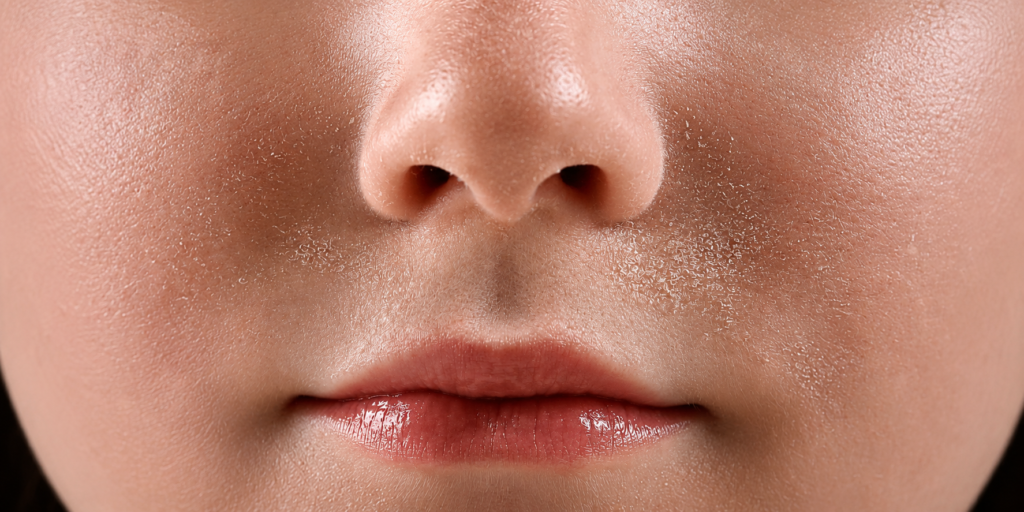
One of the most noticeable signs of dry skin around nose is flaky skin. Small white flakes may appear around the nostrils or sides of the nose. These flakes occur when dead skin cells build up because the skin lacks enough moisture.
2. Redness Around Nose
Dryness can weaken the skin barrier and cause inflammation, leading to redness around the nose. This redness may become more noticeable after washing the face or applying certain products.
3. Tight or Rough Skin
Many people describe dry skin around the nose as feeling tight or uncomfortable. The skin may lose its smooth texture and feel rough when touched.
4. Itching and Irritation
When the skin becomes dehydrated, it can trigger itching and sensitivity. Scratching the area can further damage the skin and increase irritation.
5. Cracked Skin
In severe cases, dry skin around nose may develop small cracks. Cracked skin can be painful and may increase the risk of irritation from skincare products.
6. Burning Sensation
Some people experience a mild burning or stinging feeling, especially when applying skincare products on damaged skin.
Why Does Dry Skin Around Nose Happen?
There are many reasons why people develop dry skin around nose. The cause may be related to environmental conditions, skincare habits, lifestyle factors, or medical skin conditions.
Understanding these causes can help you choose the right treatment.
1. Cold Weather and Low Humidity
Weather changes are one of the most common causes of dry skin around nose. During winter, cold air contains less moisture, which can remove hydration from the skin.
Cold winds can damage the protective barrier of the skin and cause:
- Dry patches
- Flaking
- Redness
- Sensitivity
Indoor heating systems can also make the air dry, which increases moisture loss from the skin.
To protect your skin during cold months, use a thicker moisturizer and avoid exposing your face to harsh winds for long periods.
2. Frequent Nose Blowing and Wiping
Frequent nose blowing is another major reason behind dry skin around nose.
When you have:
- Cold
- Flu
- Allergies
- Sinus problems
you may wipe your nose repeatedly throughout the day. Constant friction from tissues can remove natural oils from the skin and create irritation.
The skin around the nostrils is especially sensitive, so repeated rubbing can lead to:
- Dryness
- Peeling
- Redness
- Tender skin
Using soft tissues and applying a protective moisturizer can help reduce irritation.
3. Harsh Skincare Products
Many skincare products are designed to remove oil, control acne, or deeply cleanse the skin. However, some products can be too aggressive and damage the skin barrier.
Products that may contribute to dry skin around nose include:
- Strong facial cleansers
- Alcohol-based toners
- Fragrance-heavy products
- Harsh acne treatments
- Strong exfoliating acids
When the skin barrier is damaged, the skin becomes unable to retain moisture properly.
A gentle skincare routine is usually better for people experiencing dryness.
4. Over-Cleansing Your Face
Keeping your face clean is important, but washing too frequently can cause problems.
Over-washing can remove:
- Natural oils
- Protective lipids
- Essential moisture
This can result in dry skin around nose, especially if you use hot water or strong cleansers.
For dry or sensitive skin, washing your face once or twice daily with a gentle cleanser is usually enough.
5. Hot Water Exposure
Many people enjoy hot showers or washing their face with warm water, but excessive heat can damage the skin barrier.
Hot water removes natural oils from the skin and can make dryness worse.
If you struggle with dry skin around nose, try using lukewarm water instead of very hot water.
6. Over-Exfoliation
Exfoliation helps remove dead skin cells, but doing it too often can create dryness.
Using:
- Facial scrubs
- Strong chemical exfoliants
- Peeling products too frequently
can irritate the sensitive skin around the nose.
Over-exfoliation may cause:
- Increased dryness
- Redness
- Burning sensation
- Weak skin barrier
Always give your skin time to recover between exfoliation sessions.
7. Dehydration and Lifestyle Factors
Although drinking water alone cannot solve every skin problem, dehydration can affect overall skin health.
Factors that may contribute to dry skin include:
- Not drinking enough fluids
- Poor sleep
- High stress levels
- Unbalanced diet
A healthy lifestyle supports better skin function and helps maintain moisture levels.
8. Sun Damage
Many people forget that sun exposure can contribute to dryness.
UV rays can damage the outer layer of the skin and weaken its protective function. Over time, this can make the skin around your nose appear rough and dehydrated.
Daily sunscreen use can help protect the skin barrier and prevent further damage.
9. Seborrheic Dermatitis
One possible reason behind dry skin around nose is seborrheic dermatitis. This is a common skin condition that usually affects oily areas of the face, including the sides of the nose, eyebrows, scalp, and areas around the ears.
Although it may look like simple dryness, seborrheic dermatitis is different because it is related to inflammation and an imbalance of natural oils on the skin.
Common symptoms include:
- Flaky skin around nose
- Redness and irritation
- Yellow or white scales
- Itching
- Greasy patches
Seborrheic dermatitis can become worse due to:
- Stress
- Cold weather
- Seasonal changes
- Hormonal changes
- Certain skincare products
If your dry skin around nose keeps returning even after moisturizing, it may be helpful to consult a dermatologist to identify whether seborrheic dermatitis is the cause.
10. Eczema and Sensitive Skin
Eczema is another skin condition that can cause dry skin around nose. People with sensitive skin often have a weaker skin barrier, which means their skin loses moisture more easily.
Eczema-related dryness may include:
- Extremely dry patches
- Itching
- Redness
- Skin irritation
- Cracking
Using gentle skincare products and avoiding triggers can help manage eczema-related dryness.
Common triggers include:
- Fragranced products
- Harsh cleansers
- Weather changes
- Stress
- Certain ingredients
If symptoms are severe or persistent, professional medical advice is recommended.
11. Allergic Reaction or Contact Dermatitis
Sometimes dry skin around nose develops because the skin reacts negatively to a product or ingredient.
This condition is called contact dermatitis. It happens when your skin becomes irritated or allergic to something it touches.
Common triggers include:
- Fragrance in skincare products
- Makeup products
- Hair products touching the face
- Toothpaste ingredients
- Essential oils
- Certain preservatives
Signs of contact dermatitis may include:
- Dry patches
- Burning sensation
- Redness
- Swelling
- Itching
If you recently changed a skincare product and noticed dryness around your nose, that product may be responsible.
12. Allergies and Nasal Problems
Seasonal allergies can also contribute to dry skin around nose.
When allergies occur, people often:
- Rub their nose frequently
- Blow their nose repeatedly
- Use nasal sprays
These actions can irritate the delicate skin around the nose.
Allergy medications and some nasal sprays may also increase dryness in some people.
Protecting the skin with a gentle moisturizer can help reduce irritation.
How to Treat Dry Skin Around Nose
The best way to treat dry skin around nose is to repair the damaged skin barrier, restore moisture, and avoid things that cause irritation.
A simple and consistent skincare routine can make a big difference.
1. Use a Gentle Cleanser
Choosing the right cleanser is one of the most important steps when treating dry skin around nose.
Avoid cleansers that:
- Create excessive foam
- Contain harsh ingredients
- Leave your skin feeling tight
Instead, choose a gentle cleanser that removes dirt and impurities while protecting natural oils.
Look for:
- Fragrance-free formulas
- Hydrating ingredients
- Cream-based cleansers
A gentle cleanser helps maintain the skin barrier and prevents additional dryness.
2. Apply Moisturizer Regularly
Moisturizer is essential for improving dry skin around nose because it helps restore hydration and protects the skin from moisture loss.
The best moisturizers contain ingredients that support skin repair.
Helpful Ingredients for Dry Skin:
Hyaluronic Acid
Hyaluronic acid attracts water and helps the skin stay hydrated. It can improve the appearance of dry and tired-looking skin.
Glycerin
Glycerin is a humectant that draws moisture into the skin and helps maintain softness.
Ceramides
Ceramides are natural lipids that strengthen the skin barrier and reduce moisture loss.
Squalane
Squalane helps soften dry skin and provides lightweight hydration.
Niacinamide
Niacinamide can help calm irritation and support a healthier skin barrier.
3. Apply Moisturizer Correctly
Many people use moisturizer but still experience dry skin around nose because they do not apply it properly.
For better results:
- Clean your face gently
- Pat your skin dry
- Apply moisturizer while your skin is slightly damp
- Reapply during the day if needed
The goal is to lock moisture into the skin.
4. Avoid Fragrance and Irritating Ingredients
When dealing with dry skin around nose, simplicity is important.
Avoid products containing:
- Artificial fragrance
- Essential oils
- Harsh alcohols
- Strong exfoliating ingredients
These ingredients may increase irritation and slow down skin recovery.
Choose products labeled:
- Sensitive skin friendly
- Fragrance-free
- Dermatologist tested
5. Reduce Exfoliation
Exfoliation can improve skin texture, but excessive exfoliation can make dry skin around nose worse.
Avoid:
- Daily scrubbing
- Rough facial brushes
- Frequent peeling treatments
If your skin is already dry and irritated, allow your skin barrier to recover first.
6. Protect Your Nose From Weather
Environmental protection is an important part of managing dry skin around nose.
During cold weather:
- Cover your face with a scarf
- Apply moisturizer before going outside
- Avoid long exposure to cold winds
During sunny weather:
- Use sunscreen
- Wear protective clothing
- Avoid excessive sun exposure
Morning Skincare Routine for Dry Skin Around Nose
A simple morning routine can help prevent dryness throughout the day.
Step 1: Gentle Cleansing
Wash your face with a mild cleanser or simply rinse with lukewarm water if your skin is very dry.
Step 2: Hydrating Serum
Use a hydrating serum containing ingredients like:
- Hyaluronic acid
- Niacinamide
- Glycerin
Step 3: Moisturizer
Apply a nourishing moisturizer around your nose area.
Step 4: Sunscreen
Finish with SPF 30 or higher sunscreen to protect your skin from UV damage.
Night Skincare Routine for Dry Skin Around Nose
Nighttime is when your skin repairs itself, making it an important time to care for dryness.
Step 1: Remove Makeup and Sunscreen
Remove makeup gently without rubbing the skin.
Step 2: Gentle Cleanser
Clean your face using a mild cleanser.
Step 3: Apply Treatment Products
If recommended for your skin type, use hydrating or barrier-supporting products.
Step 4: Moisturize
Apply a rich moisturizer to keep your skin hydrated overnight.
Home Care Tips for Dry Skin Around Nose
Simple habits can improve dry skin around nose:
✅ Avoid hot water
✅ Drink enough fluids
✅ Use a humidifier in dry rooms
✅ Sleep properly
✅ Avoid scratching flaky skin
✅ Use soft tissues when wiping your nose
✅ Moisturize consistently
✅ Avoid changing skincare products frequently
Common Mistakes That Make Dry Skin Around Nose Worse
Many people accidentally worsen dryness by following unhealthy skincare habits.
Avoid:
❌ Washing your face too often
❌ Using harsh scrubs
❌ Applying too many products
❌ Ignoring sunscreen
❌ Picking peeling skin
❌ Using fragranced products on irritated skin
Healthy skin requires balance. More products do not always mean better results.
How to Prevent Dry Skin Around Nose
Preventing dry skin around nose is easier when you follow a consistent skincare routine and protect your skin barrier. Many people focus only on treating dryness after it appears, but daily prevention can help keep the skin smooth, comfortable, and healthy.
The goal of prevention is to maintain moisture, avoid irritation, and protect the delicate skin around your nose from external damage.
1. Keep Your Skin Hydrated
One of the best ways to prevent dry skin around nose is keeping your skin properly hydrated. When your skin has enough moisture, it becomes stronger and better able to protect itself from environmental stress.
Use a moisturizer regularly, especially:
- After washing your face
- Before going outside
- Before sleeping
Choose moisturizers containing hydrating ingredients such as glycerin, ceramides, hyaluronic acid, and squalane.
2. Use Lukewarm Water Instead of Hot Water
Hot water may feel relaxing, but it can remove natural oils from your skin and increase dryness.
To protect against dry skin around nose:
- Wash your face with lukewarm water
- Avoid long hot showers
- Do not rub your skin aggressively after washing
Gentle habits help maintain a healthy skin barrier.
3. Choose Skincare Products Carefully
The products you use daily can have a major impact on your skin.
To reduce the chances of developing dry skin around nose, choose products that are:
- Fragrance-free
- Gentle
- Suitable for sensitive skin
- Non-irritating
Avoid products that contain harsh ingredients that may damage your skin barrier.
4. Protect Your Skin During Winter
Cold weather is one of the biggest triggers of dry skin around nose. Cold air and wind can remove moisture from your skin and cause irritation.
During winter:
- Apply moisturizer before leaving home
- Cover your face in strong winds
- Avoid staying outside for long periods
- Use a thicker moisturizer if needed
Extra protection can prevent dryness and cracking.
5. Use Sunscreen Every Day
Many people associate sunscreen only with preventing sunburn, but it also protects your skin barrier.
Sun exposure can make dry skin around nose worse by damaging the outer layer of skin.
Use:
- Broad-spectrum sunscreen
- SPF 30 or higher
- A formula suitable for sensitive skin
Daily sunscreen use helps protect against dryness, irritation, and premature skin damage.
6. Maintain a Healthy Lifestyle
Your skin health is connected to your overall lifestyle.
Helpful habits include:
- Drinking enough water
- Eating a balanced diet
- Getting enough sleep
- Managing stress
- Avoiding smoking
These habits support healthier skin and improve its ability to retain moisture.
Best Ingredients for Dry Skin Around Nose
Choosing the right ingredients can make a big difference when dealing with dry skin around nose.
Ceramides
Ceramides are important components of the skin barrier. They help prevent moisture loss and keep the skin protected.
Hyaluronic Acid
Hyaluronic acid helps attract water to the skin and improves hydration levels.
Glycerin
Glycerin helps the skin hold moisture and keeps it soft and smooth.
Niacinamide
Niacinamide supports the skin barrier and may help reduce redness and irritation.
Squalane
Squalane provides lightweight moisture and helps improve dry, rough skin texture.
Ingredients to Avoid When You Have Dry Skin Around Nose
Some ingredients can increase irritation, especially when your skin barrier is already damaged.
Try to avoid:
- Strong fragrances
- Harsh alcohols
- Rough physical scrubs
- Excessive exfoliating acids
- Strong acne treatments without guidance
Using fewer but better products is often more beneficial for sensitive, dry skin.
When Should You See a Dermatologist?
Most cases of dry skin around nose improve with proper skincare. However, professional advice may be needed if your symptoms continue.
Consult a dermatologist if:
- Dryness lasts for several weeks
- Skin becomes painful or cracked
- There is severe redness or swelling
- The area becomes infected
- Symptoms keep returning
- Home treatments are not helping
A dermatologist can determine whether the cause is simple dryness or a skin condition such as eczema, seborrheic dermatitis, or contact dermatitis.
Frequently Asked Questions About Dry Skin Around Nose
Why do I have dry skin around my nose?
Dry skin around nose can happen because of cold weather, low humidity, harsh skincare products, frequent nose wiping, dehydration, allergies, or skin conditions.
How can I quickly fix dry skin around my nose?
To improve dryness, use a gentle cleanser, apply a moisturizer with hydrating ingredients, avoid irritating products, and protect your skin from weather changes.
Is moisturizer enough for dry skin around nose?
Moisturizer helps restore hydration, but the cause of dryness should also be addressed. If harsh products or a skin condition are responsible, dryness may return.
Can dry skin around nose be caused by allergies?
Yes, allergies can contribute to dryness because frequent nose wiping and certain allergy treatments may irritate the skin.
Is dry skin around nose a sign of eczema?
Sometimes. Eczema can cause dry, itchy, and irritated patches around the nose. A dermatologist can help confirm the cause.
How often should I moisturize dry skin around nose?
You can apply moisturizer at least twice daily or whenever your skin feels dry and uncomfortable.
Can exfoliation help dry skin around nose?
Exfoliation may help remove dead skin cells, but over-exfoliating can worsen dryness. Use exfoliation carefully and avoid it when your skin is irritated.
Expert Tips for Healthier Skin Around Nose
To maintain smooth and comfortable skin around your nose:
- Keep your skincare routine simple
- Avoid constantly changing products
- Always moisturize after cleansing
- Protect your skin from the sun
- Avoid rubbing or scratching dry patches
- Pay attention to ingredients in skincare products
- Give your skin time to repair
Healthy skin does not require dozens of products. A consistent routine with gentle and effective products is usually the best approach.
Final Thoughts
Dry skin around nose is a common skincare concern that can happen because of weather changes, skincare mistakes, allergies, or underlying skin conditions. Although it can be uncomfortable and frustrating, the right approach can help restore smooth and healthy-looking skin.
The most important steps are protecting your skin barrier, using gentle products, applying moisturizer regularly, and avoiding habits that increase dryness.
If your dry skin around nose continues despite proper care, consulting a dermatologist can help identify the exact cause and provide suitable treatment.
With consistent skincare habits and proper protection, you can reduce dryness, improve skin comfort, and maintain healthier skin around your nose.