Introduction
When it comes to achieving healthy, glowing, and youthful skin, few skincare ingredients are as trusted as Vitamin A and Vitamin C. Dermatologists, skincare experts, and scientific researchers have recommended Vitamin A and Vitamin C for years because these two nutrients work in different but complementary ways to improve skin texture, reduce signs of aging, brighten the complexion, and support long-term skin health.
Whether you’re dealing with acne, dark spots, uneven skin tone, fine lines, wrinkles, or dull-looking skin, understanding how Vitamin A and Vitamin C work can help you build an effective skincare routine.
In this complete guide, you’ll learn everything about Vitamin A and Vitamin C, including their benefits, differences, how they work together, the best food sources, skincare products, safety tips, and the latest scientific findings.
What Are Vitamin A and Vitamin C?
Vitamin A and Vitamin C are essential nutrients that play important roles in maintaining healthy skin, supporting the immune system, and protecting cells from damage.
Although both vitamins contribute to healthier skin, they work differently.
- Vitamin A mainly improves skin renewal and increases cell turnover.
- Vitamin C protects the skin from environmental damage while boosting collagen production.
Because their functions complement each other, Vitamin A and Vitamin C are often considered one of the most powerful skincare combinations available today.
Understanding Vitamin A
Vitamin A is a fat-soluble vitamin that your body stores in the liver. It is necessary for healthy vision, immune function, reproduction, and skin repair.
In skincare, Vitamin A is commonly found as:
- Retinol
- Retinal
- Retinyl Palmitate
- Retinoic Acid
- Retinyl Acetate
These ingredients belong to the retinoid family and are widely used in anti-aging and acne treatments.
How Vitamin A Works
The main role of Vitamin A is increasing skin cell turnover.
Instead of allowing dead skin cells to remain on the surface, Vitamin A encourages your skin to replace old cells with fresh new ones.
This process helps:
- Smooth rough skin
- Reduce acne
- Fade pigmentation
- Improve skin texture
- Reduce wrinkles
- Increase collagen production
Understanding Vitamin C
Vitamin C is a water-soluble vitamin that the human body cannot produce naturally. Because of this, you must obtain it through food or skincare products.
Vitamin C is one of the most powerful antioxidants known in dermatology.
It protects skin from damage caused by:
- UV rays
- Air pollution
- Cigarette smoke
- Free radicals
- Environmental stress
Besides protection, Vitamin C also plays a major role in collagen production.
Without enough Vitamin C, your body cannot produce healthy collagen effectively.
Why Vitamin A and Vitamin C Work Better Together
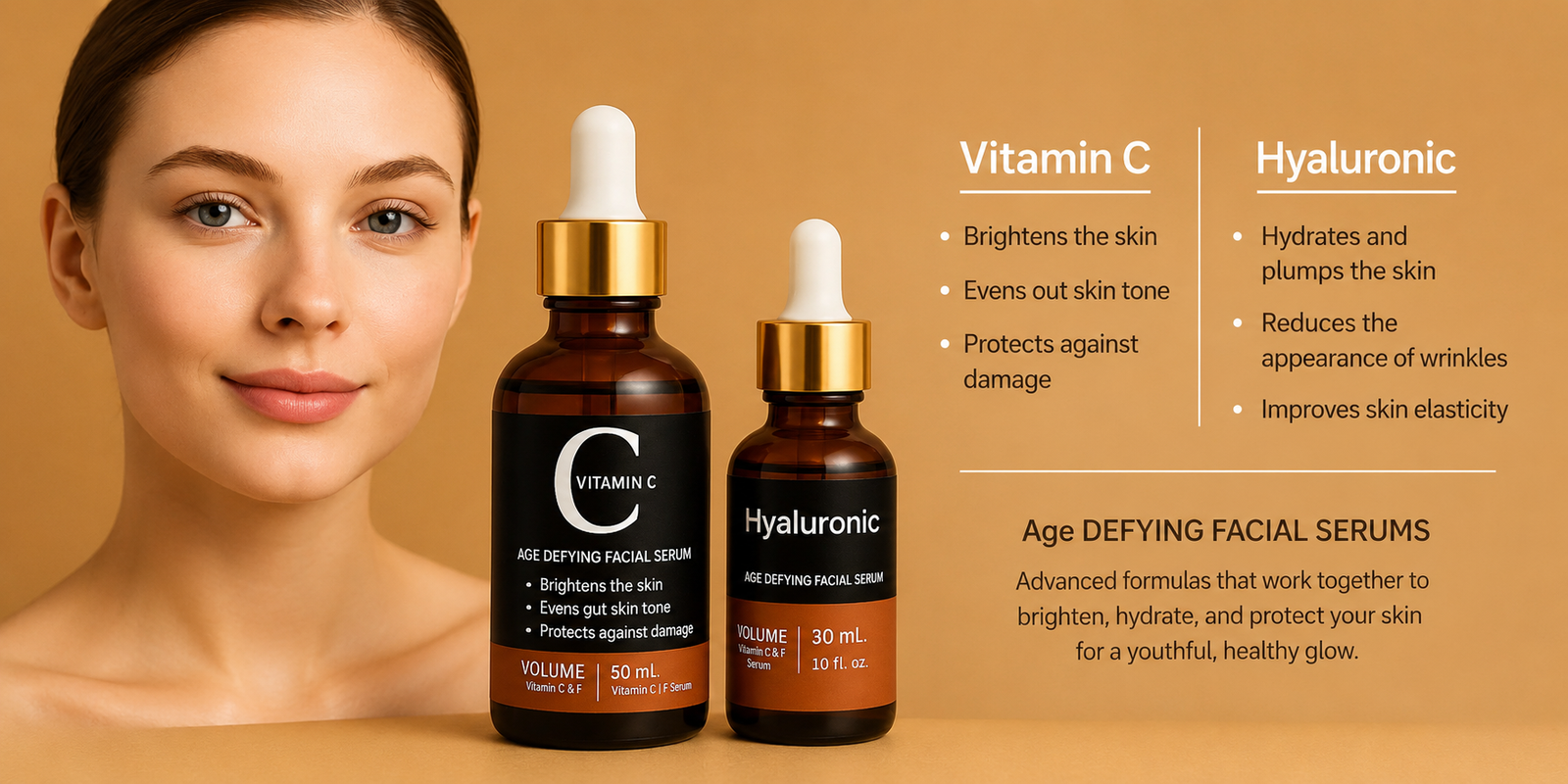
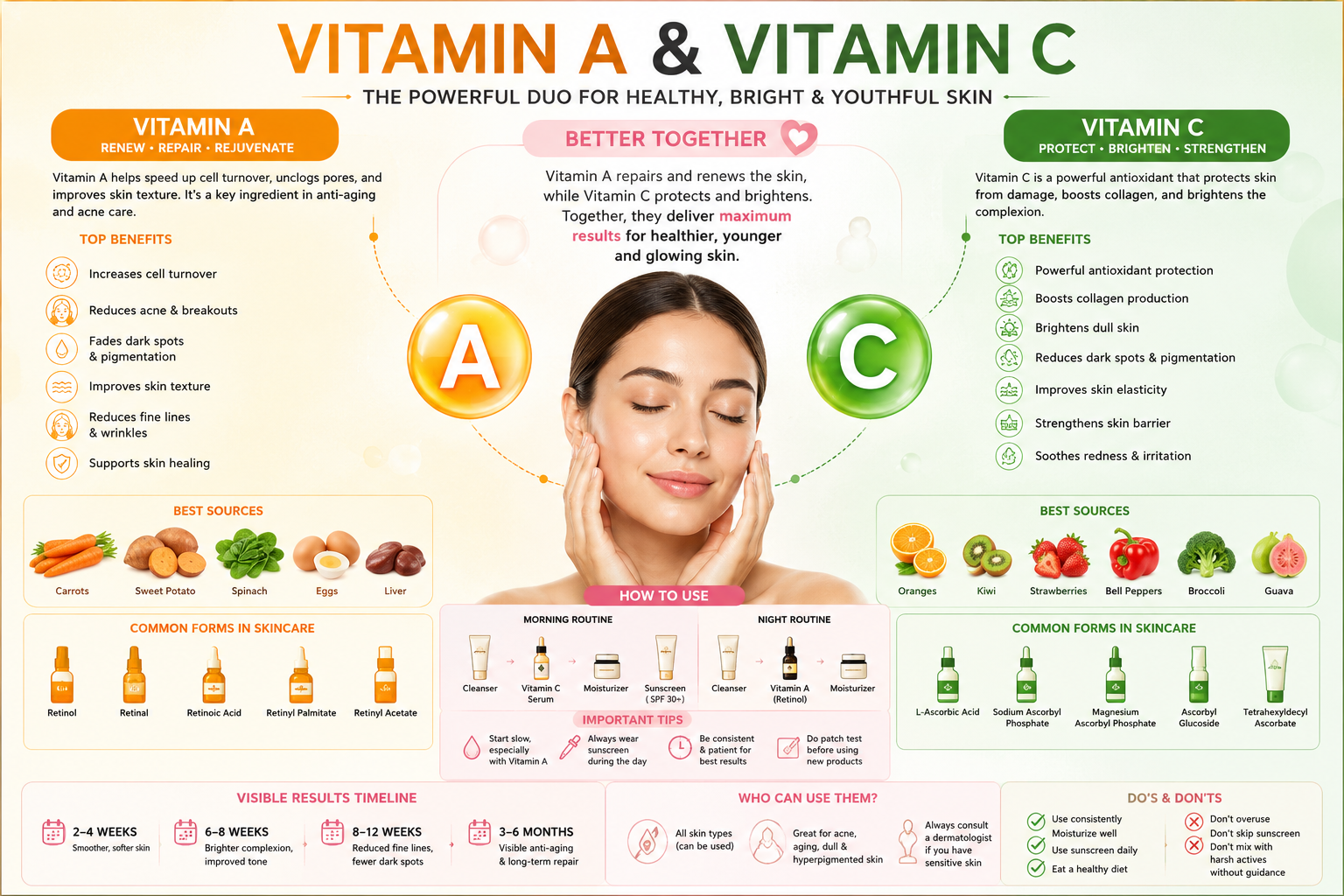
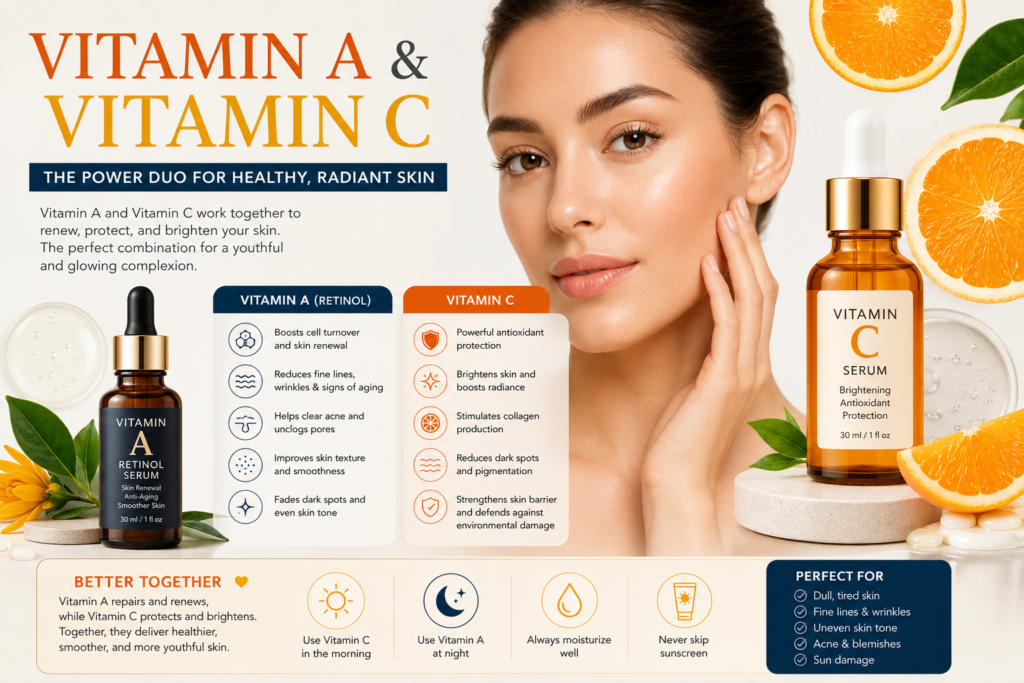
Many skincare experts now recommend using Vitamin A and Vitamin C together because they perform different functions that complement each other.
Vitamin A
- Repairs damaged skin
- Speeds up skin renewal
- Reduces acne
- Improves texture
- Minimizes wrinkles
Vitamin C
- Protects collagen
- Brightens skin
- Fights free radicals
- Improves elasticity
- Reduces pigmentation
Together, Vitamin A and Vitamin C create a skincare routine that focuses on both repairing existing damage and preventing future damage.
Top Benefits of Vitamin A and Vitamin C
1. Boost Collagen Production
Collagen is the protein responsible for firm, youthful-looking skin.
As we age, collagen production naturally decreases.
Using Vitamin A and Vitamin C helps maintain collagen levels by:
- Stimulating new collagen production
- Protecting existing collagen
- Slowing collagen breakdown
This helps reduce visible signs of aging.
2. Reduce Fine Lines and Wrinkles
One of the biggest reasons people choose Vitamin A and Vitamin C is their anti-aging benefits.
Vitamin A improves skin renewal while Vitamin C strengthens collagen fibers.
Over time, this combination helps:
- Smooth crow’s feet
- Reduce forehead lines
- Minimize smile lines
- Improve skin firmness
3. Brighten Dull Skin
Dull skin usually develops because of:
- Dead skin buildup
- Sun damage
- Pollution
- Slow skin renewal
Vitamin A removes older skin cells while Vitamin C brightens newly revealed skin.
The result is a naturally radiant complexion.
4. Improve Skin Tone
Uneven skin tone is often caused by:
- Sun exposure
- Acne scars
- Hyperpigmentation
- Age spots
Using Vitamin A and Vitamin C consistently can gradually improve overall skin tone.
5. Fade Dark Spots
Dark spots are one of the most common skincare concerns.
Vitamin A speeds up skin renewal.
Vitamin C helps reduce excess melanin production.
Together they gradually fade:
- Acne marks
- Sun spots
- Post-inflammatory pigmentation
- Age spots
Vitamin A Benefits for Skin
Vitamin A offers many skin benefits, including:
Improves Cell Turnover
Healthy skin naturally renews itself every month.
As we age, this process slows.
Vitamin A speeds up this cycle.
Controls Acne
Vitamin A helps:
- Unclog pores
- Reduce excess oil
- Prevent blackheads
- Prevent whiteheads
- Reduce inflammation
Smooths Skin Texture
Regular Vitamin A use improves:
- Rough skin
- Large pores
- Uneven texture
- Acne scars
Supports Skin Healing
Vitamin A also supports skin repair after:
- Acne
- Minor skin injuries
- Sun exposure
Vitamin C Benefits for Skin
Vitamin C provides several important skincare benefits.
Powerful Antioxidant Protection
Every day your skin faces:
- Pollution
- UV exposure
- Blue light
- Free radicals
Vitamin C helps neutralize these harmful molecules before they damage skin cells.
Boosts Natural Glow
Vitamin C is famous for creating brighter-looking skin.
It helps reduce dullness and restores a healthy glow.
Supports Skin Barrier
A healthy skin barrier keeps moisture inside while blocking harmful irritants.
Vitamin C helps strengthen this protective barrier.
Reduces Redness
People with mild redness may notice improvements after consistent Vitamin C use because of its antioxidant properties.
Best Food Sources of Vitamin A
Although skincare products are popular, nutrition also matters.
Foods rich in Vitamin A include:
- Carrots
- Sweet potatoes
- Spinach
- Kale
- Eggs
- Liver
- Milk
- Cheese
- Pumpkin
- Mangoes
Eating these foods regularly supports healthy skin from within.
Best Food Sources of Vitamin C
Vitamin C-rich foods include:
- Oranges
- Lemons
- Grapefruit
- Kiwi
- Strawberries
- Broccoli
- Bell peppers
- Tomatoes
- Papaya
- Guava
Fresh fruits and vegetables remain the best natural sources of Vitamin C.
Can You Use Vitamin A and Vitamin C Together?
Yes.
Modern dermatology generally supports using Vitamin A and Vitamin C in the same overall skincare routine, although some people prefer Vitamin C in the morning and Vitamin A (retinoids) at night to reduce irritation and take advantage of each ingredient’s strengths.
A common beginner routine is:
Morning
- Gentle cleanser
- Vitamin C serum
- Moisturizer
- Broad-spectrum sunscreen (SPF 30 or higher)
Night
- Gentle cleanser
- Vitamin A (retinol) product
- Moisturizer
This approach allows you to benefit from antioxidant protection during the day and skin renewal overnight.
Scientific Research on Vitamin A and Vitamin C
Over the past two decades, scientists have extensively studied Vitamin A and Vitamin C because of their significant effects on skin health. Research shows that these vitamins support collagen production, improve skin texture, protect against oxidative stress, and help reduce visible signs of aging.
Vitamin A works by increasing skin cell turnover and encouraging collagen remodeling, while Vitamin C functions as a powerful antioxidant that protects skin cells from free radical damage. Together, Vitamin A and Vitamin C provide a balanced approach to both repairing existing skin damage and preventing future damage.
How Vitamin A and Vitamin C Support Collagen
Collagen is the protein responsible for keeping skin firm, smooth, and youthful. As people age, collagen production naturally slows, leading to wrinkles and sagging skin.
Vitamin A
Vitamin A stimulates fibroblast cells, which are responsible for producing collagen. Regular use helps improve skin elasticity and reduces the appearance of fine lines over time.
Vitamin C
Vitamin C is essential for collagen synthesis. Without enough Vitamin C, the body cannot produce stable collagen fibers. It also helps protect collagen from environmental damage caused by UV rays and pollution.
Using Vitamin A and Vitamin C consistently can support stronger, healthier skin over the long term.
Can Vitamin A and Vitamin C Reduce Hyperpigmentation?
Hyperpigmentation occurs when excess melanin creates darker patches on the skin.
Common causes include:
- Acne scars
- Sun damage
- Hormonal changes
- Aging
- Inflammation
Vitamin A
Vitamin A speeds up the replacement of pigmented skin cells with newer, healthier cells.
Vitamin C
Vitamin C helps reduce melanin production, making dark spots appear lighter over time.
Together, Vitamin A and Vitamin C are widely used in skincare routines aimed at improving uneven skin tone.
Vitamin A and Vitamin C for Acne
Acne affects millions of people worldwide, and Vitamin A and Vitamin C can play supportive roles in an acne-focused routine.
Vitamin A Benefits
- Helps unclog pores
- Regulates skin cell turnover
- Reduces blackheads and whiteheads
- Improves post-acne marks
- Supports smoother skin texture
Vitamin C Benefits
- Helps reduce redness after breakouts
- Supports wound healing
- May improve the appearance of acne marks
- Provides antioxidant protection during skin recovery
People with sensitive or severe acne should consult a dermatologist before adding active ingredients to their routine.
Best Skincare Routine Using Vitamin A and Vitamin C
A simple routine can help maximize the benefits of Vitamin A and Vitamin C.
Morning Routine
- Gentle cleanser
- Vitamin C serum
- Moisturizer
- Broad-spectrum sunscreen (SPF 30 or higher)
Vitamin C is commonly used in the morning because it provides antioxidant protection against daily environmental stress.
Evening Routine
- Gentle cleanser
- Vitamin A (retinol or another retinoid, if appropriate)
- Moisturizer
Vitamin A is generally applied at night because retinoids can increase sensitivity to sunlight.
How Long Does It Take to See Results?
Skincare improvements take time. Results vary depending on skin type, product strength, and consistency.
Typical timelines are:
- 2–4 weeks: Skin may feel smoother.
- 6–8 weeks: Skin tone may begin to look more even.
- 8–12 weeks: Fine lines and texture may continue to improve.
- 3–6 months: More noticeable long-term improvements in overall skin appearance.
Consistency is more important than using large amounts of product.
Choosing the Right Vitamin A Product
Vitamin A products are available in different strengths.
Common options include:
- Retinol
- Retinal (Retinaldehyde)
- Retinyl Palmitate
- Prescription retinoids (under medical supervision)
Beginners often start with lower-strength retinol and gradually increase use if their skin tolerates it.
Choosing the Right Vitamin C Product
Common Vitamin C ingredients include:
- L-Ascorbic Acid
- Sodium Ascorbyl Phosphate
- Magnesium Ascorbyl Phosphate
- Ascorbyl Glucoside
- Tetrahexyldecyl Ascorbate
L-Ascorbic Acid is one of the most researched forms, while some derivatives may be gentler for sensitive skin.
Possible Side Effects
Although Vitamin A and Vitamin C are widely used, they may cause side effects in some people.
Vitamin A
Possible temporary effects include:
- Dryness
- Mild peeling
- Irritation
- Redness
- Increased sun sensitivity
Introducing retinoids gradually and using moisturizer can help reduce irritation.
Vitamin C
Some people may experience:
- Mild tingling
- Temporary redness
- Irritation with high-strength formulas
Patch testing a new product is a good practice, especially if you have sensitive skin.
Who Should Be Careful?
Seek professional medical advice before using certain Vitamin A products if you are:
- Pregnant
- Planning pregnancy
- Breastfeeding (depending on the product)
Topical retinoids are generally not recommended during pregnancy unless specifically advised by a healthcare professional.
People with eczema, rosacea, or very sensitive skin may also benefit from personalized advice before starting a routine.
Common Myths About Vitamin A and Vitamin C
Myth 1: Vitamin C instantly removes dark spots.
Fact: Improvement usually takes consistent use over several weeks or months.
Myth 2: More Vitamin A gives faster results.
Fact: Using too much Vitamin A can increase irritation without improving results.
Myth 3: Vitamin A and Vitamin C can replace sunscreen.
Fact: These ingredients support skin health but do not replace daily sunscreen.
Myth 4: Everyone must use high-strength products.
Fact: Many people achieve good results with lower-strength formulations that suit their skin type.
Lifestyle Tips to Support Healthy Skin
To get the most from Vitamin A and Vitamin C, combine skincare with healthy habits:
- Eat a balanced diet rich in fruits and vegetables.
- Stay hydrated.
- Get enough sleep.
- Avoid smoking.
- Limit excessive sun exposure.
- Wear sunscreen daily.
- Exercise regularly.
Healthy skin is influenced by both skincare products and overall lifestyle.
Rather than expecting overnight changes, focus on steady, consistent use and choose products suited to your skin type. If you have a skin condition or are unsure which products are appropriate, consult a qualified dermatologist.